Executive analytics serves as a crucial tool for organizations seeking to identify and capitalize on growth opportunities. By examining key identifiers such as 640008708 and 120576, businesses can uncover underlying trends that drive market dynamics. The integration of data-driven strategies allows for enhanced decision-making. However, the effectiveness of these strategies hinges on continuous monitoring of performance metrics. What specific methodologies can further refine this analytical approach?
Understanding Executive Analytics
Understanding executive analytics is crucial for organizations aiming to leverage data-driven decision-making within their leadership frameworks.
Analyzing Key Identifiers for Growth
How can organizations effectively identify and leverage key growth indicators? By analyzing identifier significance, they can discern patterns that reveal growth potential.
Employing analytical frameworks enables a systematic evaluation of data points, allowing organizations to prioritize factors that contribute to expansion.
This strategic approach not only enhances decision-making but also empowers organizations to navigate market dynamics with agility and foresight, fostering sustainable growth.
Implementing Data-Driven Strategies
Identifying key growth indicators lays the groundwork for organizations to implement data-driven strategies effectively.
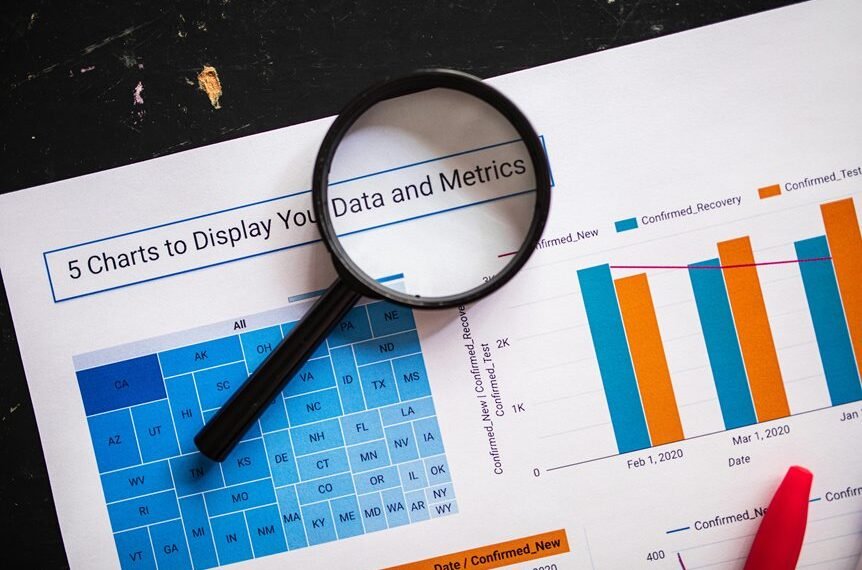
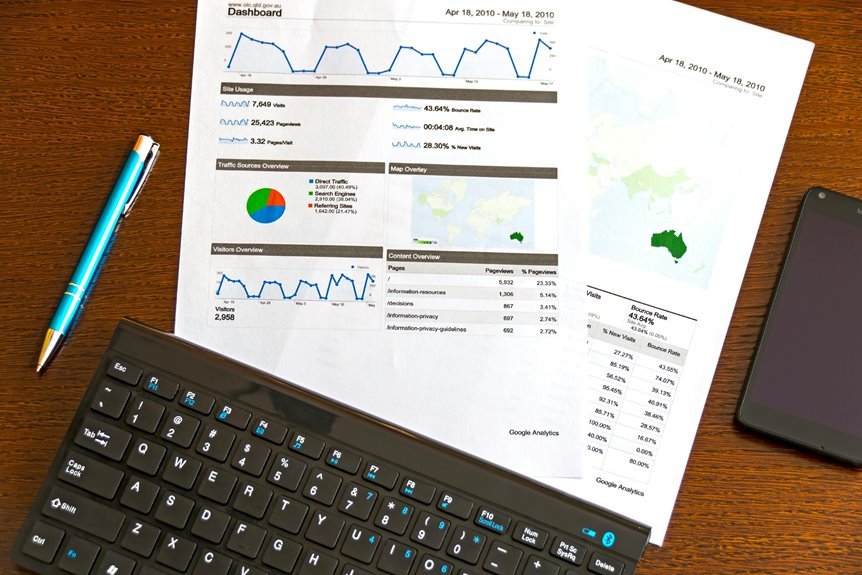
By leveraging data visualization tools, companies can present complex data in an accessible format, facilitating informed decision-making.
Additionally, predictive modeling enables organizations to forecast potential outcomes based on historical data, guiding strategic initiatives.
Together, these approaches empower organizations to harness analytics for sustainable growth and competitive advantage.
Monitoring Trends and Performance Metrics
As organizations strive for growth, the continuous monitoring of trends and performance metrics becomes essential for informed decision-making.
Effective trend forecasting and the utilization of performance dashboards enable executives to visualize data, identify patterns, and assess operational efficiency.
Conclusion
In the grand theater of corporate growth, executive analytics serves as the omniscient narrator, guiding decision-makers through the labyrinth of data with the fervor of an overly enthusiastic tour guide. While the identifiers—640008708 and friends—strut across the stage, one might wonder if the true stars are the insights themselves or the endless PowerPoint slides that accompany them. Ultimately, as businesses chase elusive growth, the real question remains: are they truly evolving, or merely rehearsing for an encore of the same old show?