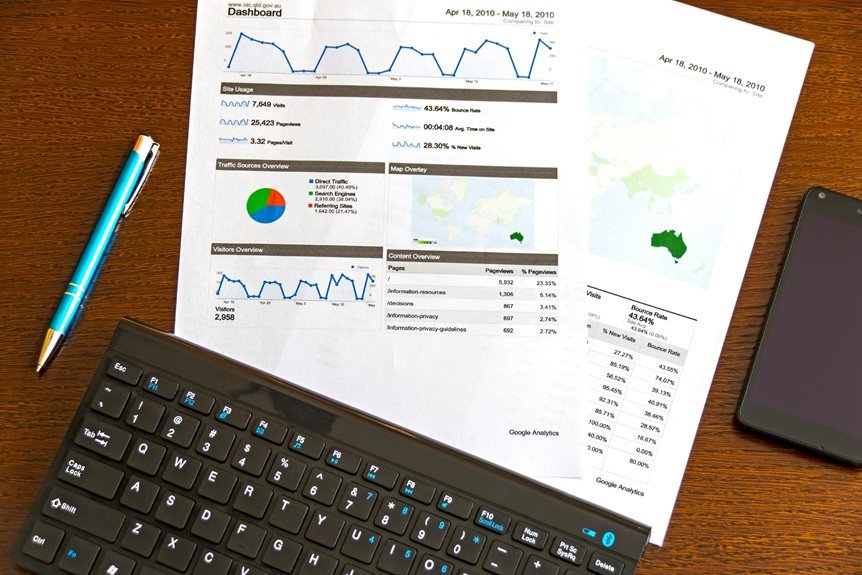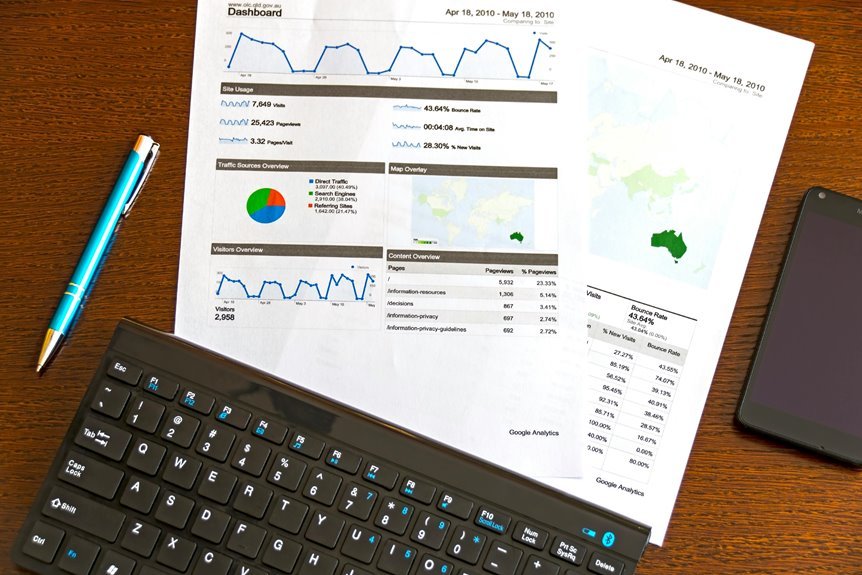
Advanced business analytics plays a crucial role in enhancing organizational decision-making processes. It employs various methodologies, including predictive modeling and data mining, to extract actionable insights from data. As businesses face ever-changing market dynamics, the integration of AI and machine learning is becoming increasingly significant. Understanding these elements can provide a clearer perspective on how companies leverage analytics for competitive advantage. What implications might these trends hold for future business strategies?
Importance of Advanced Business Analytics in Today’s Market
As businesses navigate an increasingly complex and competitive landscape, the importance of advanced business analytics becomes evident.
Data-driven decision making is crucial, enabling organizations to leverage insights derived from extensive data sets. Predictive modeling further enhances this process, allowing firms to anticipate trends and behaviors.
Consequently, advanced analytics empowers businesses to make informed choices, fostering adaptability and competitive advantage in today’s market dynamics.
Key Methodologies and Techniques in Business Analytics
Advanced business analytics relies on a variety of methodologies and techniques that enable organizations to extract actionable insights from data.
Key approaches include predictive modeling, which forecasts future trends based on historical data, and data mining, which uncovers hidden patterns within large datasets.
These methodologies empower businesses to make informed decisions, optimize operations, and ultimately foster a culture of data-driven freedom and innovation.
Emerging Trends Shaping the Future of Analytics
What factors are driving the evolution of analytics in today’s business landscape?
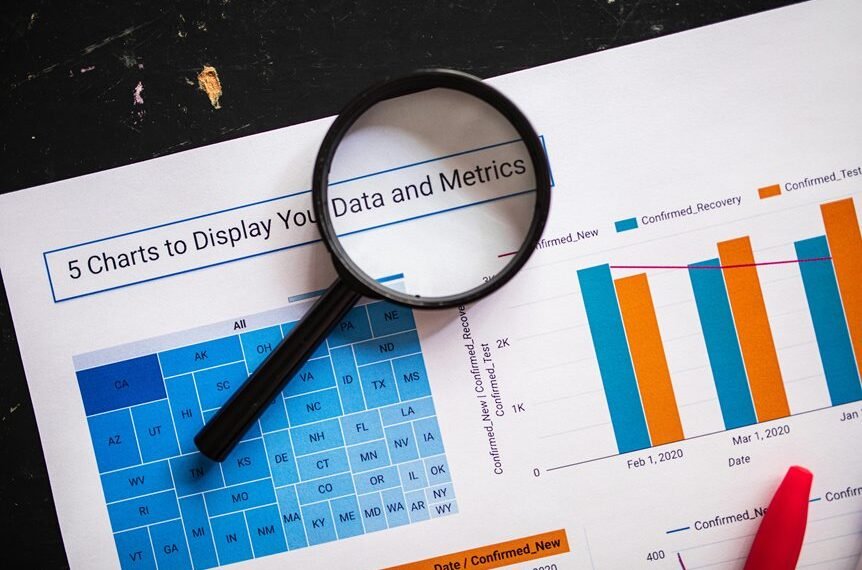
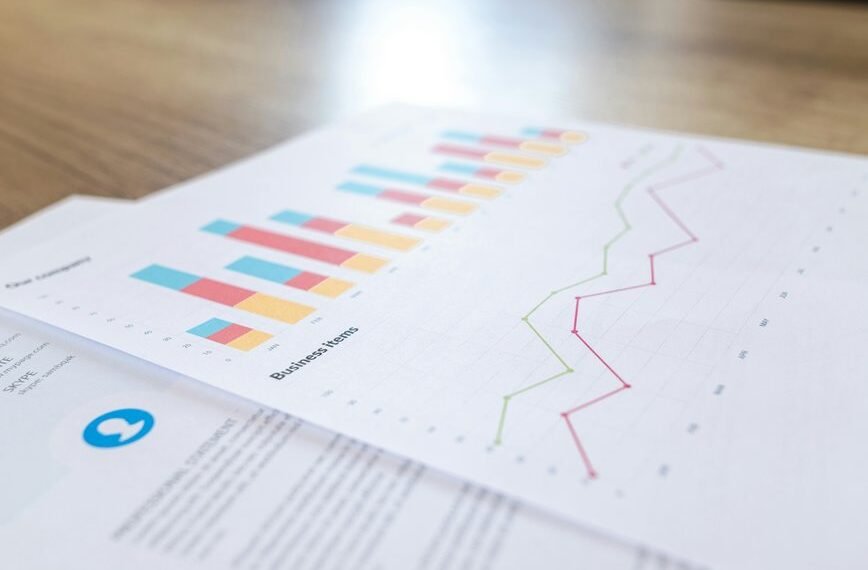
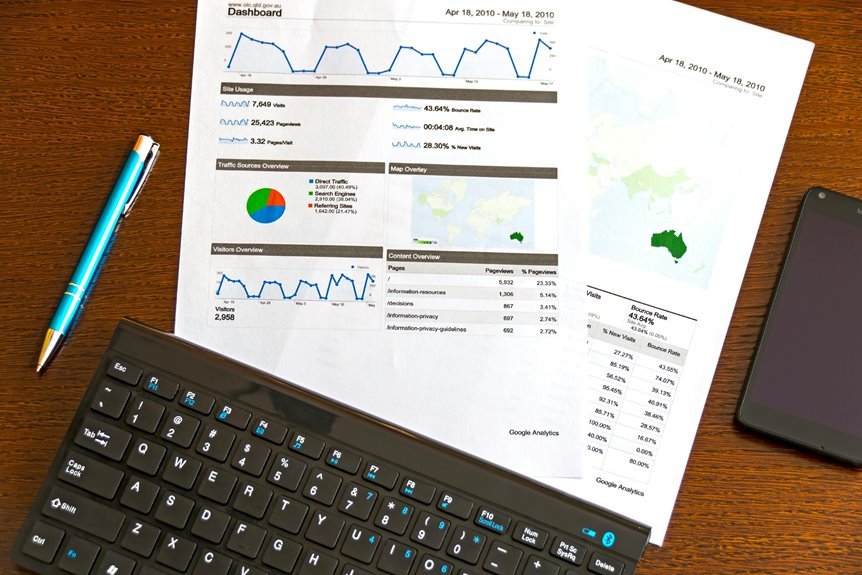
Increasing reliance on data visualization and predictive modeling technologies is reshaping decision-making processes. Organizations aim to leverage real-time insights, enhancing agility and responsiveness.
Additionally, the integration of artificial intelligence and machine learning is propelling analytics toward greater sophistication, empowering businesses to forecast trends and adapt strategies more effectively in an ever-changing environment.
Case Studies: Real-World Applications of Advanced Analytics
The increasing sophistication of analytics, driven by emerging technologies and methodologies, has led to significant advancements in various industries.
Case studies illustrate the efficacy of predictive modeling in customer segmentation, enhancing data visualization for clearer insights.
Furthermore, robust risk assessment techniques and precise performance measurement enable organizations to conduct thorough market analysis, facilitating informed decision-making and fostering competitive advantages in dynamic environments.
Conclusion
In a world where data reigns supreme and intuition is merely a nostalgic relic, advanced business analytics emerges as the knight in shining armor. As organizations scramble to decode the labyrinth of numbers, the reliance on predictive modeling and AI becomes almost poetic. Yet, one must ponder: will the relentless quest for insights lead to enlightenment or merely a deeper abyss of complexity? Ultimately, as businesses embrace this analytical revolution, they might just find themselves lost in their own data-driven utopia.